
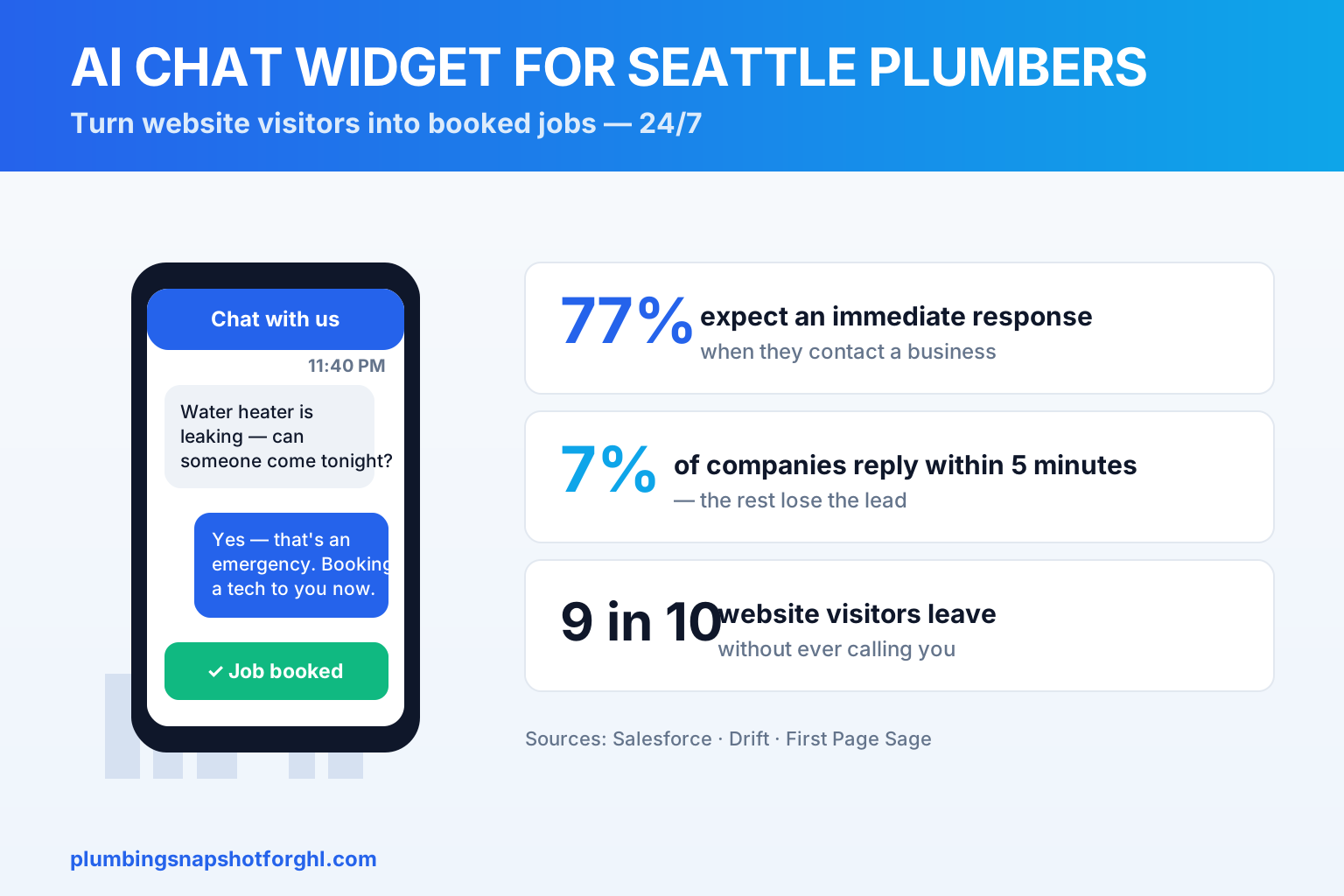
Most homeowners who land on a Seattle plumber’s website never pick up the phone. They read your service page at 10 PM, weigh whether the leak can wait, don’t feel like calling a stranger, and quietly click back to Google — where the next shop is one tap away. An AI chat widget is the fix: a small chat window on your site that answers the homeowner’s question instantly, captures their name and number, and books the job 24/7 — including the exact after-hours moment a pipe lets go and a call would ring to voicemail. It’s the difference between a visitor who bounces and a booked ticket, and for most plumbing sites it’s the single cheapest lead-capture upgrade available.
In this guide
- What an AI chat widget actually does for a plumbing website
- The data: why website visitors leave without calling
- Why this hits Seattle plumbers especially hard
- The 5-minute rule: speed-to-lead is the whole game
- Chat widget vs. missed-call text-back vs. answering service
- What it looks like when it works
- Mistakes that leave chat leads on the table
- Frequently asked questions
- About the author
- Related reading
What an AI chat widget actually does for a plumbing website
An AI chat widget is the small “Chat with us” bubble in the corner of your website. But the useful version isn’t a canned FAQ bot — it’s an AI trained on your services, service area, and pricing rules that can hold a real conversation with a homeowner and drive it toward a booked appointment.
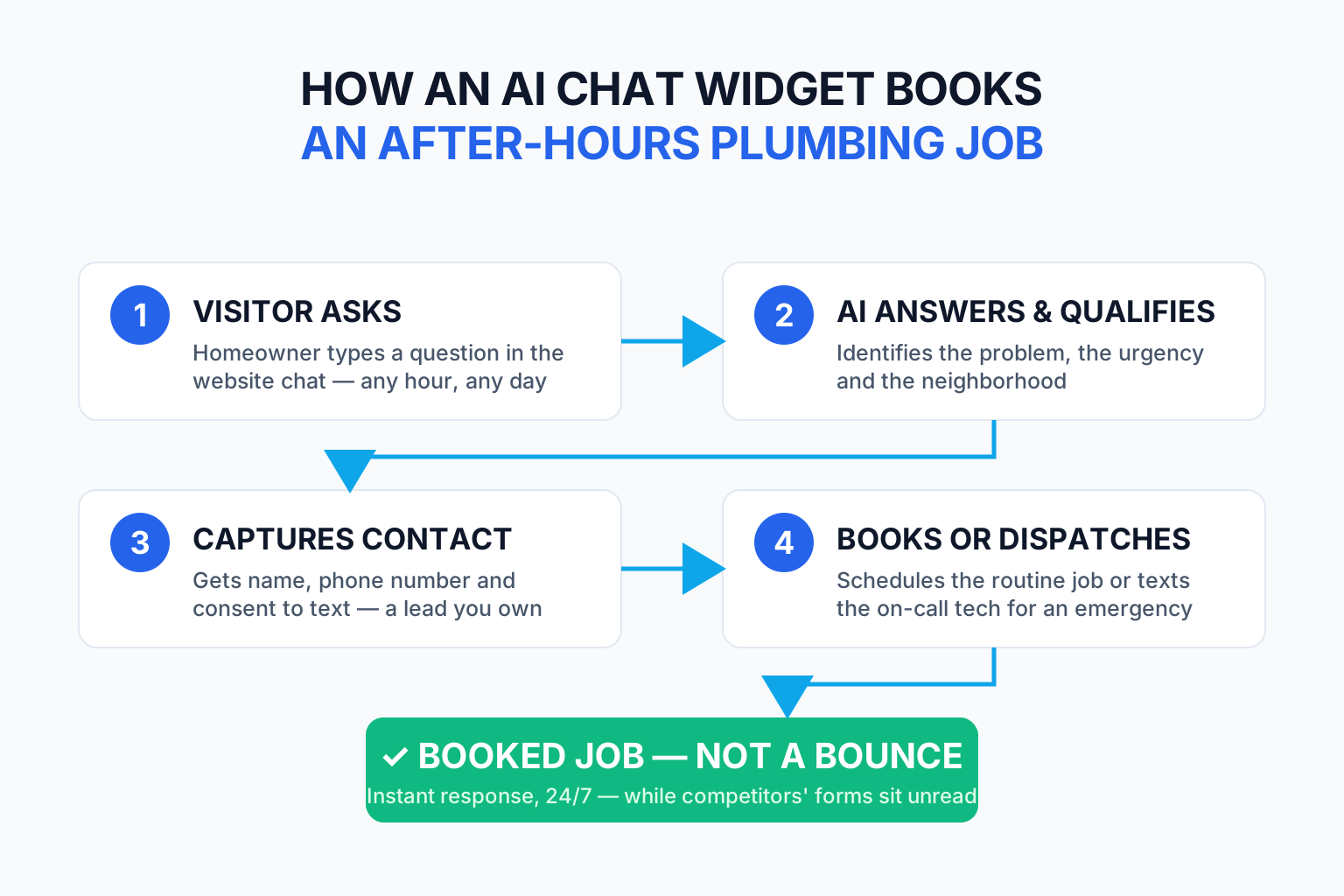
For a plumbing shop, a good widget does four jobs in sequence:
- Answers the question that was about to make them leave. “Do you work in Ballard?” “How much is a water heater replacement?” “Can someone come tonight?” A homeowner with a live answer stays; one with an unanswered question bounces.
- Qualifies the job. It captures the problem (burst pipe, no hot water, slow drain), the address or neighborhood, and the urgency — the same triage a good dispatcher would run.
- Captures the contact. Even if the homeowner isn’t ready to book, the widget gets a name, a phone number, and consent to text — turning an anonymous visitor into a lead you own.
- Books or dispatches. For a routine job it drops an appointment straight onto your calendar; for an emergency it texts your on-call tech and fires an instant confirmation to the homeowner.
The key word is 24/7. A receptionist works business hours. A chat widget works at 11 PM on a Sunday, which — for an emergency trade like plumbing — is exactly when the highest-value, lowest-competition jobs come in.
The phone gets all the attention, but the website is where the quiet leaks are. Someone reads your emergency page at midnight, has one question, doesn’t want to call a stranger, and leaves. You never even knew they were there. A chat widget catches that person in the ten seconds before they’re gone.
The data: why website visitors leave without calling
Here’s the uncomfortable math of a plumbing website: you pay for the traffic — through ads, SEO, and your Google Business Profile — and then most of it evaporates. Across home-services businesses, the average website conversion rate sits around 7.8% (First Page Sage). Flip that number over and it means roughly nine out of ten visitors leave without ever contacting you.
They don’t leave because they didn’t need a plumber. They leave because of friction: an unanswered question, no obvious next step, or a reluctance to call and get a voicemail. And the moment they bounce, they’re back on a search results page where three competitors are one click away.
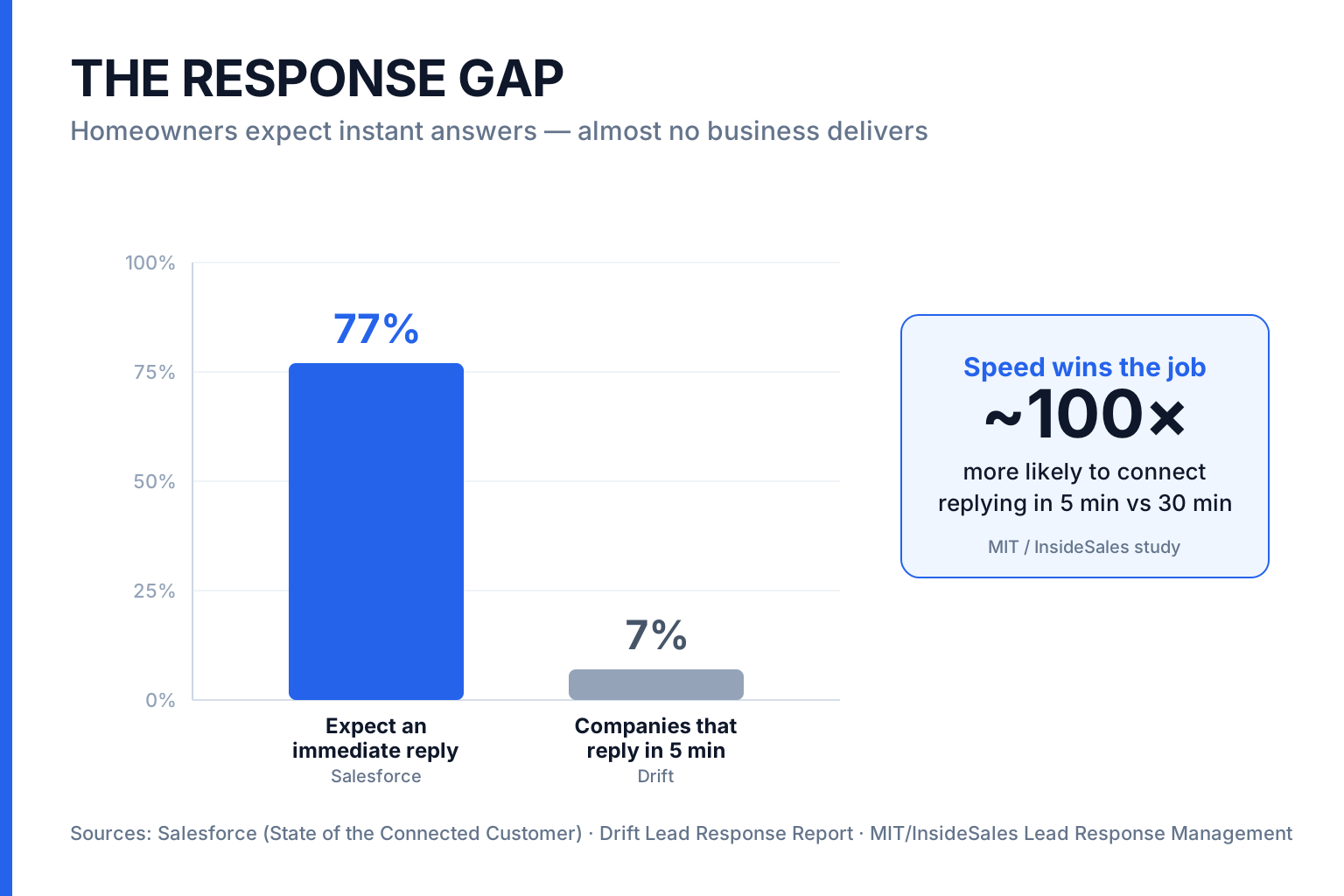
The expectation gap is the real story. 77% of customers say they expect to interact with someone immediately when they contact a business (Salesforce, State of the Connected Customer), and 90% rate an immediate response as important or very important for a service question — with 60% defining “immediate” as ten minutes or less (HubSpot). Meanwhile, 53% of customers will abandon an online interaction if they can’t quickly find an answer to their question (Forrester).
Put those two facts side by side and you have the entire case for an AI chat widget. Homeowners expect an instant answer; almost no business delivers one. The chart below is the gap — and every point of it is a job that goes to whoever answers first.
The response gap: the share of customers who expect an immediate response versus the share of companies that actually reply within five minutes. Sources: Salesforce and Drift.
And people prefer chat for this. In customer-satisfaction benchmarks, live chat scores about 73% satisfaction — the highest of any channel — versus 61% for email and 44% for phone (eDigital / Kayako). A homeowner who won’t call will happily type “water heater leaking, need someone today” into a chat box. Give them the box.
Customer-satisfaction rating by support channel — live chat consistently rates highest. Source: eDigital / Kayako Customer Service Benchmark.
This isn’t a fringe tool, either. The global chatbot market was worth roughly $7.76 billion in 2024 and is projected to reach $27.29 billion by 2030 (a ~23.3% annual growth rate), with small and mid-sized businesses the fastest-growing segment (Grand View Research). The shops adopting website chat now are early to their local market, not late to a trend.
Why this hits Seattle plumbers especially hard
Seattle is a near-ideal market for website chat, for three concrete reasons.
First, it’s a big, high-value pool of homeowners. Seattle is home to about 755,000 people with a median owner-occupied home value near $938,600 (U.S. Census Bureau QuickFacts). Homeowners here have expensive homes to protect and the means to pay for fast, quality work — but only 43.7% of Seattle homes are owner-occupied, which means the owners you do want are a specific, competitive slice worth capturing every single time.
Second, the housing stock is old — and old houses leak. A large share of Seattle’s homes predate 1980, which means aging supply lines, original cast-iron and galvanized pipe, and water heaters well past their prime. That’s a steady stream of repipes, slab-adjacent leaks, and emergency replacements — exactly the high-ticket work you don’t want bouncing to a competitor because nobody answered a late-night question.
Third, Seattle homeowners research online and expect responsiveness. This is a tech-fluent city where people compare, read reviews, and message businesses after hours from their phones. A plumbing site that can’t hold a conversation at 9 PM is quietly handing those researchers to the shop whose site can.
The 5-minute rule: speed-to-lead is the whole game
If you take one number from this article, make it this one. The classic MIT / InsideSales Lead Response Management study — built on three years of data and more than 100,000 call attempts — found that contacting a web lead within 5 minutes instead of 30 makes you about 100× more likely to actually connect with them and 21× more likely to qualify the lead (study summary).
That decay is brutal and fast. Yet the Harvard Business Review audit of 2,241 U.S. companies found the average firm took about 42 hours to respond to an inbound web lead, and 23% never responded at all (HBR, “The Short Life of Online Sales Leads”). And Drift’s secret-shopper audit of 433 companies found only 7% responded within five minutes (Drift).
Here’s why this is a superpower for a plumber, not just a sales stat: the AI chat widget’s response time is essentially zero, always. It doesn’t matter if the lead comes in at 2 PM on a Tuesday or 2 AM on a holiday — the widget engages instantly, every time, while your competitor’s contact form sits in an inbox until Monday. In an emergency trade where the first shop to respond usually wins the job, “instant, 24/7” isn’t a nicety. It’s the moat.
Chat widget vs. missed-call text-back vs. answering service
These tools get lumped together, but they cover different channels. You want all three; here’s what each one does.
The point: the chat widget covers a channel the other two don’t touch — the anonymous website visitor. In the Plumbing Snapshot, all three run off one system, so a lead captured by chat, phone, or an unanswered call lands in the same pipeline and follows up automatically. That’s the difference between a bunch of disconnected tools and a system that never drops a lead. You can see how the online booking flow ties into it, and how it fits the broader plan to get more plumbing leads.
What it looks like when it works
Picture a Wednesday night in Wallingford. A homeowner walks into the kitchen and finds a puddle spreading from the base of the water heater. It’s 10:40 PM. They grab their phone, search “water heater leaking plumber Seattle,” and land on two shops.
Shop A has a clean website and a phone number. The homeowner isn’t going to call a stranger at 10:40 PM and risk voicemail, so they read for thirty seconds, don’t see a clear next step, and tap back to the results.
Shop B has a chat widget that pops a simple line: “Water heater trouble? I can help right now.” The homeowner types “it’s leaking from the bottom, is that an emergency?” The widget explains that a bottom leak usually means the tank has failed and should be handled fast, asks for the neighborhood and a phone number, offers a first-thing-tomorrow slot or an emergency call-out tonight, and — the moment they pick — texts Shop B’s on-call tech with the address and the problem.
Same storm, same homeowner, same neighborhood. One shop got a booked ticket; the other never knew the person existed. Multiply that by the after-hours leaks across a city of 755,000 people (Census), and the widget isn’t a gadget — it’s a materially bigger book of business.
Mistakes that leave chat leads on the table
Every one of these is a setup problem, not a budget problem — which is exactly why we wire the chat widget, the CRM capture, the calendar booking, the on-call dispatch, and the compliant follow-up together in the done-for-you snapshot instead of leaving you to bolt a generic bot onto your site and hope.
What is an AI chat widget for a plumbing website?
It's an AI-powered chat window on your website that talks with homeowners in real time — answering questions like 'do you work in my neighborhood?' or 'how much is a water heater replacement?', figuring out the job and its urgency, capturing the person's name and number, and then booking a routine appointment onto your calendar or dispatching your on-call tech for an emergency. Unlike a basic FAQ bot, it's trained on your services, service area, and pricing rules, and it runs 24/7.
How is a chat widget different from missed-call text-back?
They cover different channels. Missed-call text-back triggers only after someone calls you and the call goes unanswered — it fires an automatic text so the caller doesn't dial the next shop. A chat widget works on your website, capturing the visitor who is reading your site but won't pick up the phone at all. Most plumbing sites have neither, and the website visitor is the larger, quieter leak. Ideally you run both, plus after-hours phone answering, off one system.
Will an AI chat widget really book jobs while I sleep?
That's the entire point. Because plumbing emergencies happen at night and on weekends, a big share of high-value, low-competition jobs come in outside business hours. The widget engages instantly at any hour, qualifies the problem, and either books a slot or texts your on-call tech with the details — so a 2 AM burst-pipe visitor becomes a scheduled job instead of a voicemail nobody hears until Monday.
Why does response speed matter so much for plumbing leads?
Because the first shop to respond usually wins the job. The MIT/InsideSales lead-response study found that answering a web lead within 5 minutes instead of 30 makes you about 100 times more likely to connect and 21 times more likely to qualify it — yet Drift found only 7% of companies respond within 5 minutes, and Harvard Business Review found the average firm takes about 42 hours. An AI chat widget responds in seconds, every time, which is a decisive edge in an emergency trade.
Do Seattle plumbers specifically need this?
Seattle is a strong fit: about 755,000 residents, a median home value near $938,600, and a large share of older homes with aging pipes and water heaters — meaning steady high-ticket emergency work. It's also a tech-fluent market where homeowners research and message businesses online, often after hours. A site that can hold a conversation at 9 PM captures leads that competitors' static sites let bounce.
Is website chat compliant with texting laws?
It can and must be. When the widget captures a phone number to follow up by text, it needs clear opt-in consent, an identified sender, and an easy opt-out — the same TCPA basics that apply to any plumbing SMS. Our snapshot builds that consent step into the chat flow so your follow-up messaging stays compliant by default. See our TCPA guide for plumbers for the specifics.
About the author
Hector Salinas is the GHL Automation Lead for Plumbing Snapshot for GHL, based in Phoenix, AZ. He spent nine years dispatching for a 12-truck plumbing operation before he ever touched a CRM, where he learned firsthand how a single missed after-hours lead turns into a lost five-figure job. He now maps every call flow, chat flow, and emergency-dispatch sequence in the Plumbing Snapshot, and writes the way he’d brief a new service manager — plainly, with the revenue math attached.
Related reading
- Missed-Call Text-Back for Plumbers — plug the phone-channel leak that pairs with your chat widget.
- The After-Hours AI Receptionist Playbook — answer the emergency calls your team can’t get to.
- Online Booking for Plumbers — the self-scheduling flow your chat widget books into.
- Local SEO for Plumbers — get the right Seattle homeowners onto your site in the first place.
- How to Get More Plumbing Leads — where website chat fits in the full lead-generation system.
- The AI Website & Social Chatbot feature — see exactly what the snapshot’s chat widget does.